Synthesizing Rolling and Sliding Sensations using Spatiotemporal Electrical Stimulation Augmented by Physical Event Cues
Award
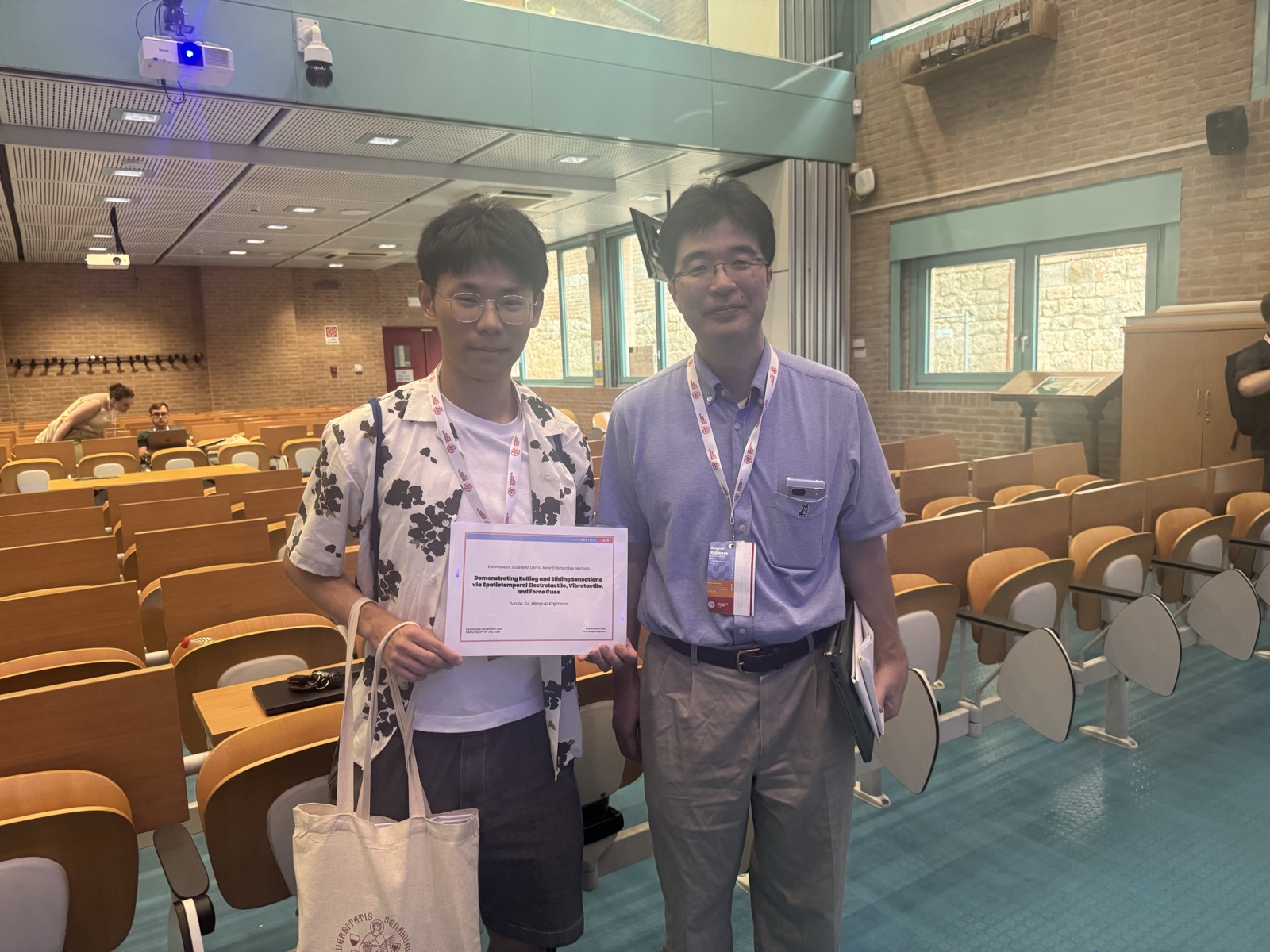
EuroHaptics 2026 Best Demo Award — Honorable Mention
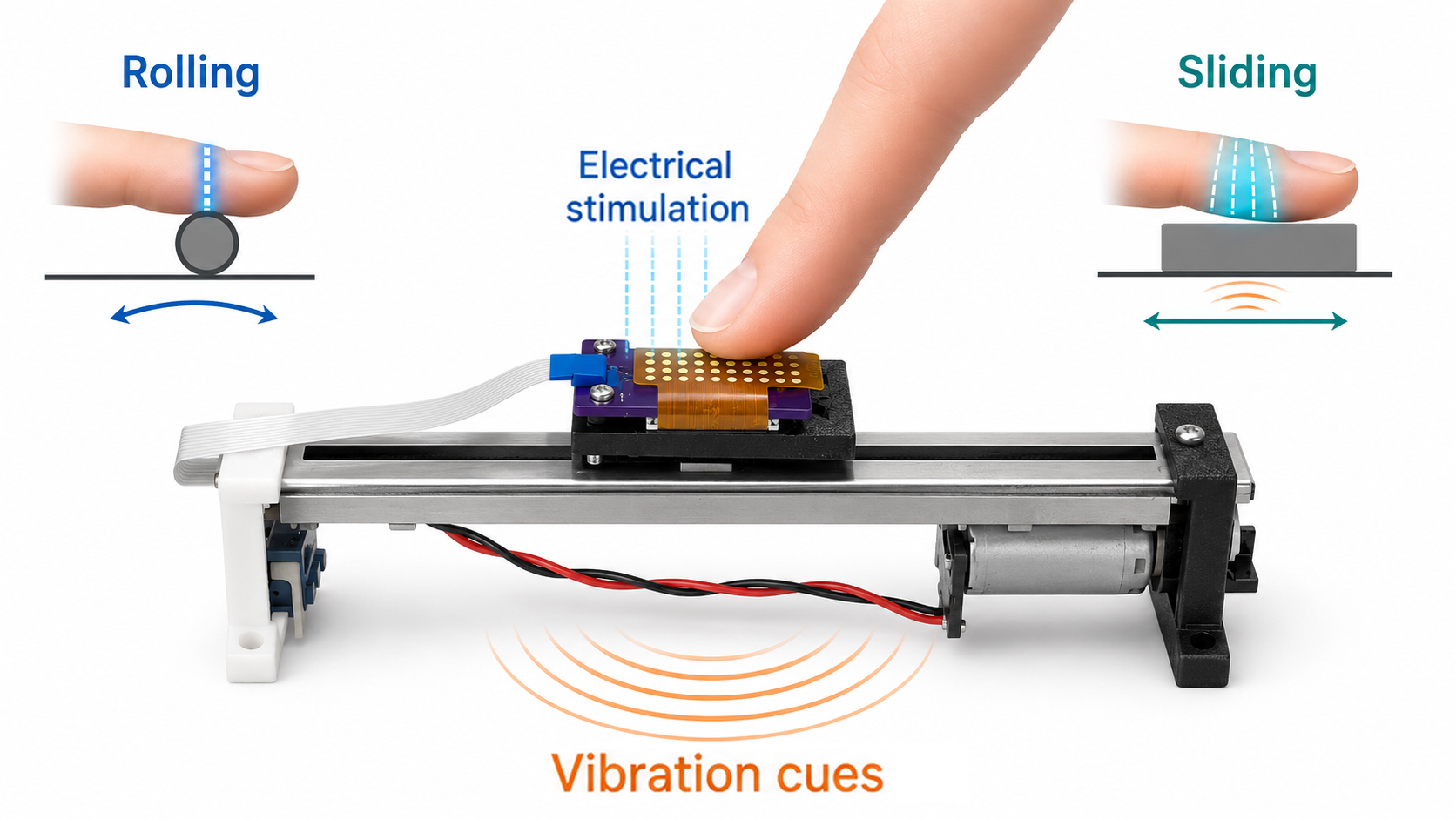
This work studies how to render the tactile difference between rolling and sliding using a compact fingertip interface instead of bulky force-feedback hardware. The system combines a spatiotemporal electrotactile array with motor-driven vibration cues so that rolling and sliding can be synthesized through contact geometry, motion consistency, and friction-related events.
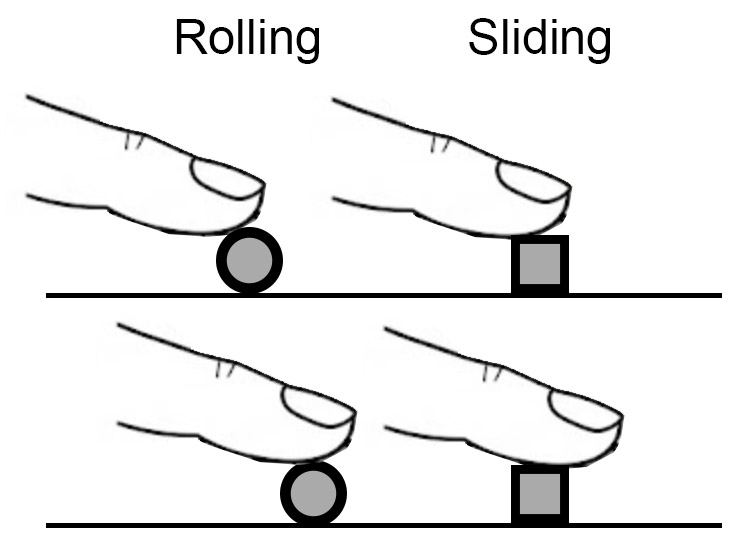
The main idea is to separate the perceptual ingredients of the two motion modes. Rolling depends more on coherent spatiotemporal contact motion, while sliding depends more on friction-related texture events. Based on this view, the study uses electrical stimulation patterns to control contact width and movement ratio, and adds physical vibration as an event cue to improve the realism of sliding-related sensations.
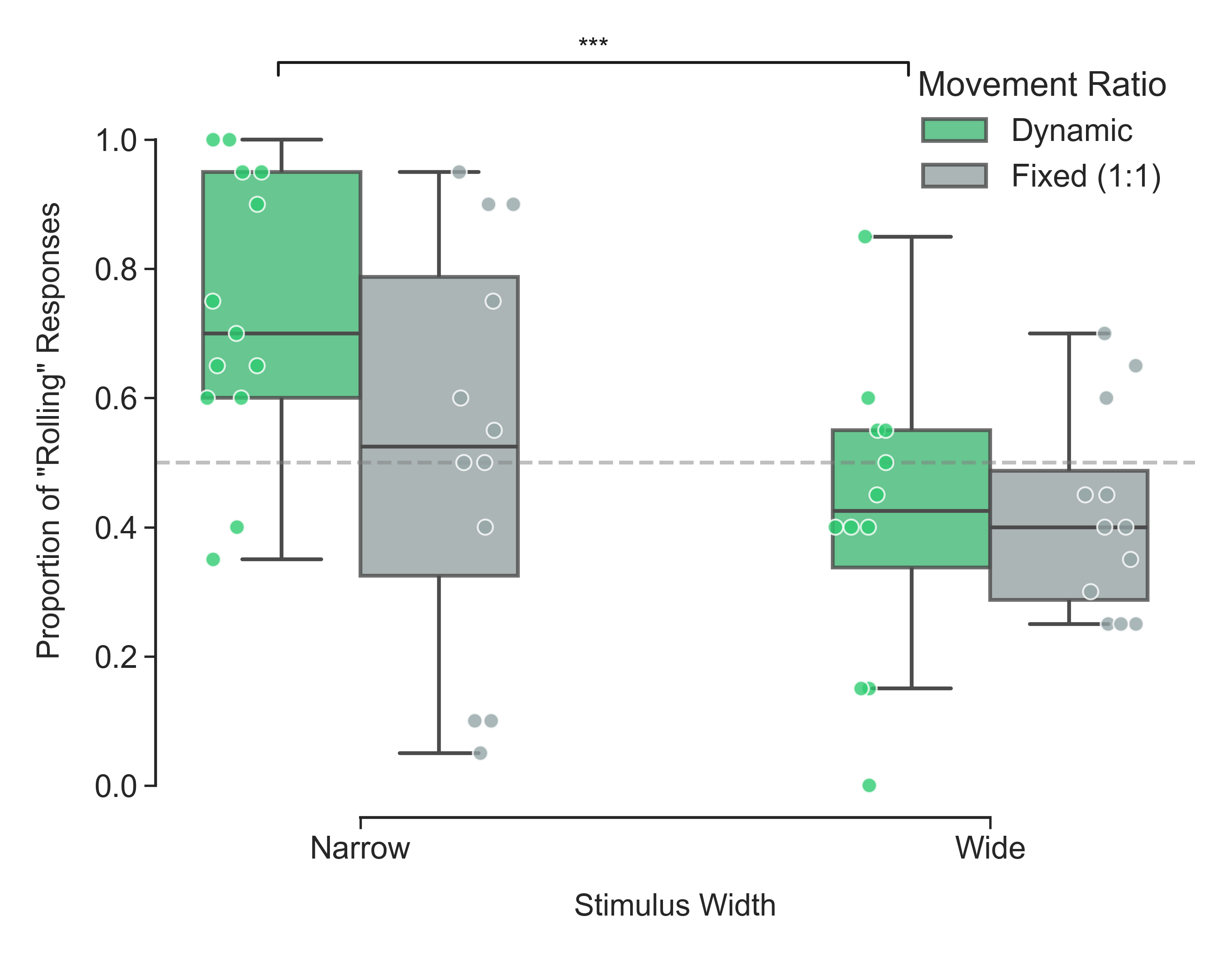
In Experiment 1, narrow contact combined with rolling-consistent dynamic motion produced the strongest rolling perception, while sliding remained ambiguous when only electrical stimulation was used. This result suggests that rolling can be stably induced from geometric and kinematic consistency alone, but sliding needs additional cues beyond apparent motion.
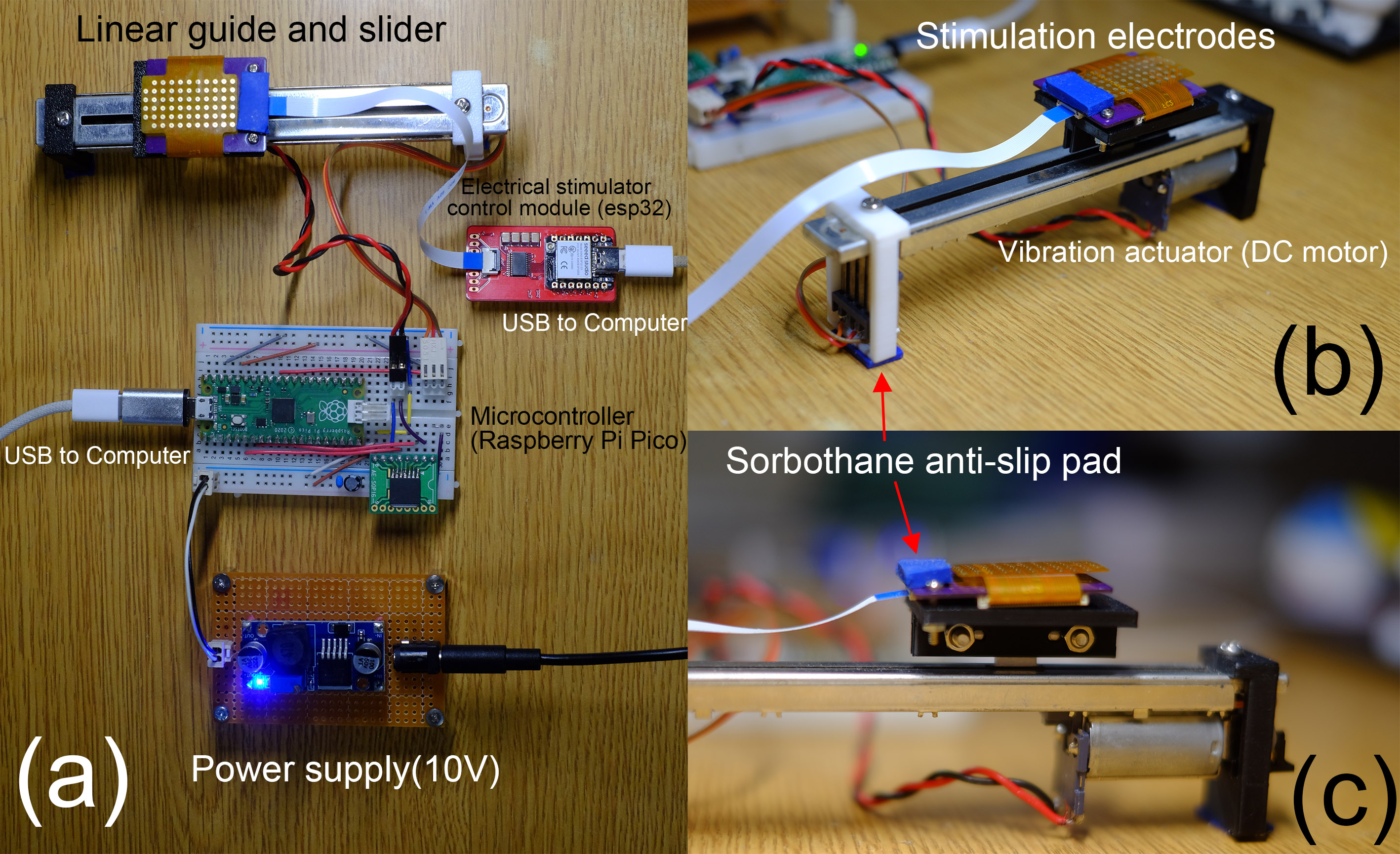
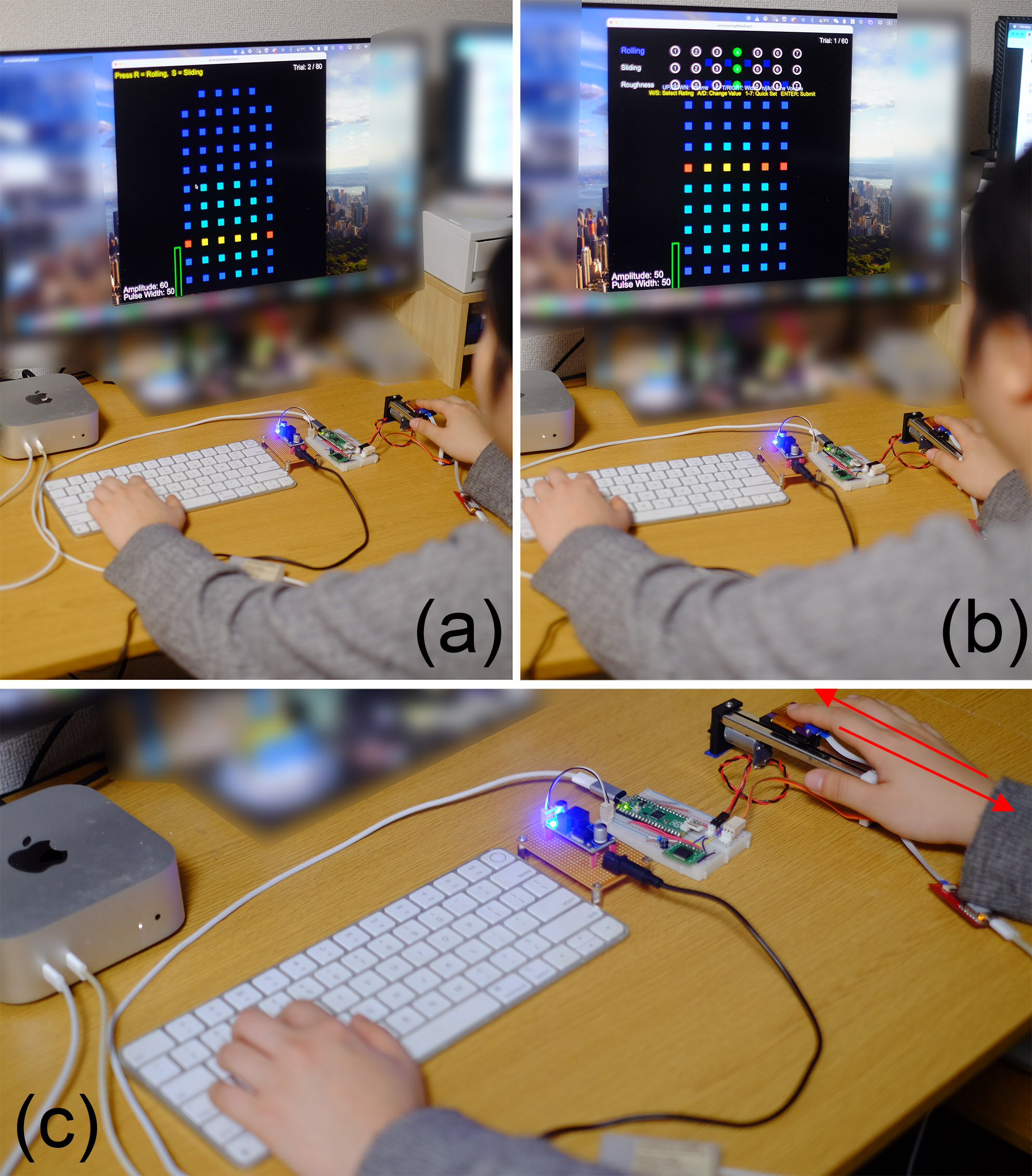
The full system was implemented on a linear-slider setup with an electrode array mounted on the moving carriage. This platform allowed precise control of apparent contact motion together with superimposed vibration, making it possible to explore how geometry and physical event cues jointly shape tactile interpretation.
These findings support a layered design strategy for lightweight surface haptics: use spatiotemporal electrotactile rendering to establish motion mode, and use vibration to supply the missing friction-event details. The approach provides a practical direction for richer tactile interaction in VR, teleoperation, and mobile or wearable interfaces where large force-feedback mechanisms are not feasible.
Publication Details
Accepted to: EuroHaptics 2026
Authors: Yunxiu Xu, Hiroyuki Kajimoto
Title: Synthesizing Rolling and Sliding Sensations using Spatiotemporal Electrical Stimulation Augmented by Physical Event Cues
Award: Best Demo Award, Honorable Mention
Demo document: PDF